
Shoes have been erotic objects since antiquity — and for people with a footwear fetish, that charge is immediate, visceral, and entirely real.
This guide covers what a footwear fetish is, the psychology behind it, the most common types, how to explore it with a partner, and why it is far more normal than most people assume.
What is a footwear fetish?
A footwear fetish is sexual or erotic arousal that is specifically triggered by shoes, boots, heels, or other forms of footwear. The attraction can be visual (the shape and silhouette of a stiletto), tactile (the feel of leather or patent), or olfactory (the scent of worn leather or rubber). It sits squarely in the Objects & Clothing category of kink — the object itself, not merely what it implies, is the source of the charge.
Footwear fetishism is closely related to foot attraction (podophilia) but is distinct: the turn-on is the shoe or boot, not necessarily the bare foot underneath it. Many people experience both; others feel only one.

The psychology: why footwear turns people on
There is no single explanation, and anyone who offers one with false certainty is overselling the science. What we do know is that several mechanisms appear to contribute — and they are far more ordinary than the cultural fuss around fetishism suggests.
Sensory richness
Footwear offers an unusually dense cluster of sensory signals at once: the visual drama of a heel reshaping posture and gait, the specific tactile vocabulary of leather or suede, the sound of a heel strike on a hard floor. For people wired toward sensory play, that density is intrinsically arousing.
Classical conditioning
Many people with footwear fetishes can trace an early association — a formative moment when arousal and footwear coincided. Behavioural research suggests that erotic associations with objects are often established through exactly this kind of pairing, then reinforced over time. The Kinsey Institute has documented object-based fetishism as a normal variant of human sexuality for decades.
Power and symbolism
Footwear carries enormous cultural weight around status, dominance, and gender — think of the iconography of the knee-high boot, the red-soled luxury heel, the heavy lace-up combat boot. For many people, the erotic charge is inseparable from that symbolism: the shoe represents power, authority, or femininity in a concentrated form. This is why footwear fetishes overlap heavily with dominance and submission dynamics.
The taboo charge
Feet and footwear occupy an unusual social position — below the waist, often hidden, rarely sexualised in polite conversation. That low-grade taboo adds friction, and friction, for many people, is exactly the point.
Types of footwear fetish
Not everyone with a footwear fetish is attracted to the same thing. The most common sub-types include:
High heels
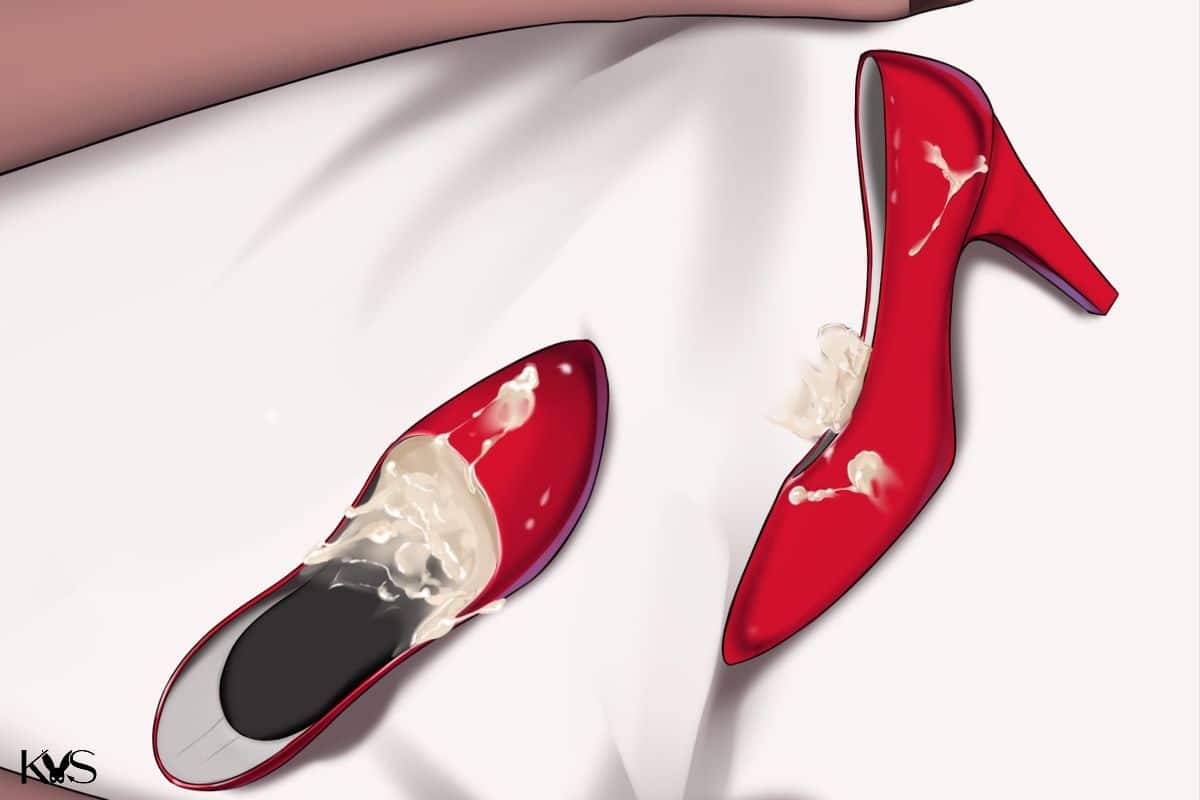
The most widely recognised variant. The appeal typically clusters around the way heels alter gait and posture, the visual geometry of the shoe itself, and the sounds and sensations of wearing them. Stilettos, kitten heels, platforms, and mules all attract their own devoted followings.
Boots
Knee-high and thigh-high boots are particularly popular in kink communities, partly because of their strong association with dominance, leather, and BDSM aesthetics. The length of the boot — and the slow act of putting one on or pulling one off — adds a theatrical, slow-burn quality that many find intensely arousing.
Leather and patent footwear
For some people, the attraction is primarily material-based rather than style-based: the shine of patent leather, the scent and yield of full-grain leather. This often overlaps with broader leather kinks.
Sneakers and trainers
Less discussed but genuinely common. The appeal here often involves the softness, warmth, and scent of a well-worn shoe — more olfactory and tactile than visual.
Signs you might have a footwear fetish
- A specific type of shoe produces a physical arousal response that ordinary clothing does not.
- You notice footwear before almost anything else when you are attracted to someone.
- Handling, smelling, or watching someone put on or remove shoes is arousing in itself.
- Shoe shopping, shoe imagery, or even thinking about particular styles produces a noticeable charge.
If several of those land, the Kink Quiz can help you map where footwear sits relative to your other interests.
How to explore a footwear fetish with a partner

Exploring any kink works best when it starts with a conversation outside the bedroom and builds gradually. Here is a practical sequence:
- Name it clearly. Tell your partner what you find arousing and why, in plain language. "I'm really turned on by high heels — the look of them, the sound — and I'd love to incorporate that" is far more useful than vague hints.
- Start in foreplay, not full scenes. Ask your partner to wear a particular pair of shoes during a sensual massage or during kissing. Low stakes, easy to stop, easy to enjoy.
- Explore the sensory layers. Once you are both comfortable, you can add more specific elements — handling or holding footwear, shoe removal as a ritual, or incorporating footwear into roleplay scenarios.
- Set a safeword. Even in relatively low-intensity kink exploration, a safeword (or safeword system) lets both partners redirect or stop without confusion. This is especially relevant if footwear play escalates into dominant/submissive dynamics.
- Check in afterward. Ask what your partner liked and what they would adjust. Iteration is how good kink practice becomes great kink practice. See our guide to aftercare for what to do after emotionally or physically intense play.
Hygiene note: if your fetish involves worn footwear or close contact with feet, basic hygiene matters — clean shoes, clean feet, and trimmed toenails prevent discomfort and keep the focus on pleasure rather than practicality.
What to say when you want footwear in your sex life
Starting the conversation can feel more nerve-wracking than it needs to be. A few approaches that work:
- Low-pressure framing: "I find it really sexy when you wear heels — would you be open to wearing them in bed sometime?"
- During a non-sexual moment: Raising the topic while cooking dinner or on a walk makes it feel like a conversation, not a negotiation.
- Show, don't only tell: If your partner asks what you find hot, pointing to an image or describing a specific scenario is often clearer and less abstract than a general explanation.

Is a footwear fetish normal?
Yes — without qualification. Footwear is consistently among the most common object fetishes reported in research on human sexuality; the Kinsey Institute classifies object fetishism as a normal variant when it is not causing distress or harm. Many people with footwear fetishes never experience any negative consequences whatsoever — they simply find certain shoes arousing, the same way other people find certain voices or scents arousing. The only relevant questions are whether it is consensual, honest with partners, and something you feel good about.
If a fetish is causing genuine distress — intrusive, unwanted, or incompatible with the life you want — that is worth discussing with a sex-positive therapist or educator. But attraction to footwear, in itself, is not a problem.
The erotic charge shoes carry is thousands of years old. What changes is whether we give ourselves permission to acknowledge it — and that permission is the only thing standing between a secret and a pleasure.
— Samuel Davis
Curious where footwear fits among everything else you are drawn to? Take the 2-minute Kink Quiz →