
Shame and arousal don't usually travel together in polite conversation — but for a significant number of people, the deliberate crossing of that wire is one of the most intense experiences in their erotic lives.
This guide covers what BDSM humiliation actually is, why it works psychologically, the main types of play, what to say and how to explore it for the first time, and — critically — how to do it safely.
What is BDSM humiliation?
BDSM humiliation is consensual erotic play in which one partner deliberately embarrasses or degrades the other to heighten sexual arousal. It belongs to the broader world of Humiliation & Degradation and almost always involves a power exchange: one person (the dominant) delivers the humiliation, the other (the submissive) receives it and — crucially — chooses to.
What makes it erotic rather than abusive is the agreement around it. Both partners negotiate in advance what words, acts, and intensity levels are welcome. Safe words are established. The scene plays out inside those agreed limits, and life outside the scene is unaffected.
The focus is emotional and psychological rather than physical. It's the internal experience of exposure, vulnerability, and surrendered status — not any particular act — that drives the arousal.
The psychology: why does being degraded feel arousing?
At first glance, wanting to feel embarrassed or belittled during sex seems paradoxical. The psychology behind it is actually coherent.
Power surrender is arousing for many people. In everyday life, social rules require constant performance — competence, composure, status. In a consensual humiliation scene, all of that is deliberately stripped away. The relief of not having to maintain the performance, in a space where it's safe not to, can be profoundly freeing.
Shame, when chosen, can be transformed. Emotions like embarrassment ordinarily signal social danger. In a controlled scene, with a trusted partner, the same physiological spike — racing heart, heat in the face, heightened self-consciousness — gets routed into erotic excitement instead. The danger is simulated; the arousal is real.
It deepens intimacy through radical vulnerability. Allowing someone to see you at your most exposed — stripped of dignity by your own invitation — requires extraordinary trust. That trust, and the feeling of being held safely even in the most vulnerable moment, often intensifies emotional bonding.
For some, it reclaims agency over past experiences. People who have experienced real humiliation sometimes find that consensually scripting and controlling similar experiences — choosing when, how, and with whom — can be genuinely liberating rather than re-traumatising. This isn't therapy, but it's a real and widely reported dynamic.
Research at the Kinsey Institute on fantasy and arousal consistently finds that power dynamics — including consensual degradation — rank among the most commonly reported erotic themes across genders and orientations.
Humiliation vs. degradation: is there a difference?
Humiliation focuses on embarrassment — making the submissive feel exposed, silly, or lesser. Verbal teasing, being made to perform a task while watched, or being given a demeaning nickname are all squarely in humiliation territory.
Degradation typically goes further, with the goal of making the submissive feel reduced or dehumanised — treated as an object, given a role of explicit low status, or subjected to more extreme verbal content ("worthless," "nothing"). It's the deeper end of the same pool.
In practice, the two blur constantly. Most people who enjoy humiliation are also exploring degradation at varying intensities, and the right word for what you're doing matters less than the agreement you've built around it.

Types of BDSM humiliation play
Verbal humiliation
The most common form. Insults, belittling comments, demeaning nicknames, criticism of performance, or simply a contemptuous tone. Words like "worthless," "pathetic," or context-specific slurs that have been negotiated in advance are typical. Small penis humiliation (SPH) — mocking the size of the submissive's genitals — is a specific well-known subgenre.
Physical humiliation
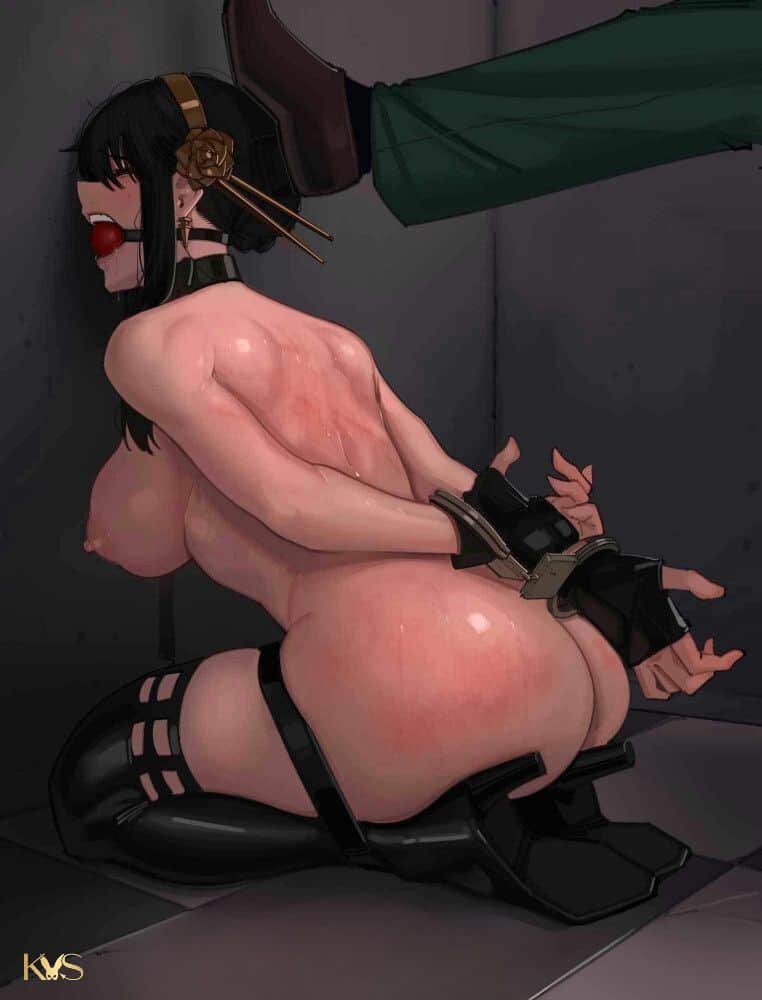
Actions rather than words. Being made to crawl, perform embarrassing tasks while clothed or naked, wear humiliating items of clothing, or behave in ways that enact low status. The physical element here isn't about pain (that's impact play) — it's about enacted subjugation. Silencing a submissive with a gag sits at the intersection of physical and psychological control: it removes speech, denying the submissive the power to articulate their own experience, which many find one of the most potent forms of dominance.
Dehumanisation / objectification
The submissive is treated as furniture, a pet, or a household object — made to hold still as a footstool, serve drinks, or adopt a pet role. Pet play has its own culture and community, but dehumanisation play is broader than that. It tends toward the more intense end of the degradation spectrum.
Emotional humiliation
Playing on insecurities, perceived inadequacies, or social anxieties. This is the most psychologically nuanced type and requires the most careful negotiation — the goal is a controlled sting, not a genuine wound. The dominant needs to know their partner's actual tender spots so they can work near them without accidentally hitting real damage.
Public or semi-public humiliation
Being embarrassed in front of others, or in a semi-public space — a lifestyle BDSM event, a discreet task in a public setting that only the submissive knows about. Consent from third parties is a hard limit here: bystanders who don't know they're in someone's scene have not consented to be part of it.
Online humiliation
Long-distance or digital: tasks, instructions, or demeaning exchanges conducted over text, voice, or video. Popular in long-distance dynamics. All the standard consent considerations apply; added caution around any sharing of images or recordings is essential.

What to say: humiliation phrases and ideas
Negotiating your vocabulary in advance is non-negotiable — what lands as electrifyingly degrading for one person genuinely hurts another. Couples who are still working out how much degradation actually appeals to them often find the full role breakdown a useful starting point for that conversation. Once you have your agreed list, some approaches:
Demeaning nicknames (agreed in advance):
- "Worthless," "pathetic," "useless" — for low-status dynamics
- "Pet," "slave," "toy," "object" — for objectification
- Sexual labels like "slut" or "whore" — popular but must be explicitly welcomed
Belittling commands and commentary:
- "Is that the best you can do?"
- "You'll do exactly what you're told — nothing more."
- "You're lucky I even bother with you."
- "Look at you. Pathetic. And you love it."
Repetition and confirmation: A classic technique is asking the submissive to repeat a phrase back — "Say it: I am your…" — which deepens the psychological experience by making them voice their own degradation. It also works as a check-in: if they genuinely can't say the word, you've hit a real limit.
Escalation in layers: Start mild and increase only with explicit green signals. A small test — a raised eyebrow, a soft "you're such a good little mess" — tells you how they're receiving the tone before you commit to anything heavier.
How to explore humiliation play for the first time
-
Have the conversation outside the bedroom. Before anything else, talk openly: what's appealing about it, what specific words or acts either of you want to try, and — equally important — what's absolutely off-limits. If a word genuinely stings in real life, it probably isn't a good candidate for a scene.
-
Establish a safe word and a safe signal. The standard traffic-light system (green/yellow/red) works well. If either partner goes non-verbal — common in deep scenes — agree on a physical signal (squeezing a held object three times, for example).
-
Start small and low-stakes. Your first scene doesn't need to be intense. A mild nickname, being asked to hold a position while watched, or a single line of gentle verbal teasing is a legitimate starting point. You're building a shared vocabulary, not proving anything.
-
Play it short initially. A first humiliation scene can be five minutes inside a longer intimate encounter. That's enough to test the dynamic and process the feelings.
-
Debrief afterward. Sit with each other after the scene, out of role, and talk about what worked, what landed oddly, and what you'd like to adjust. This is as important as the scene itself.
-
Honour the aftercare. See below — this is not optional.
Aftercare: the essential close
Humiliation play is psychologically intense by design, and the comedown can be sharp. Many submissives experience a low after a deep scene — sometimes called "sub-drop" — marked by vulnerability, sadness, or emotional sensitivity. Dominants can also crash ("dom-drop") as the adrenaline of the role recedes.
Aftercare is whatever brings both partners back to equilibrium:
- Physical comfort — holding, warmth, a blanket
- Verbal reassurance that explicitly separates the scene from reality: "What we just did was play. You are not actually any of those things."
- Hydration, snacks, quiet time if needed
- Check-in questions: "How are you feeling right now? Is there anything you need?"
A complete guide to building an aftercare practice lives in our aftercare article.
What NOT to do: common mistakes in humiliation play
- Assuming silence is consent. A submissive deep in a scene may not speak up if something goes wrong. Check in actively; don't wait for them to stop you.
- Using real pain points without negotiation. If you know your partner is genuinely insecure about something, that's not a target for a humiliation scene unless they've explicitly told you it's fair game — and even then, tread carefully.
- Confusing the role with the person. Everything said in scene is fiction. If there's any doubt about that afterward, say so plainly and repeatedly.
- Skipping aftercare because the session felt fine. The emotional weight sometimes lands hours later. Check in again the next day.

BDSM humiliation and the broader D/s dynamic
Humiliation play usually sits inside a dominance and submission framework — it's one of the most common tools a dominant uses to enact the power exchange. But it isn't exclusive to formal D/s relationships. Some couples dip into a mild humiliation dynamic with no other BDSM framework around it at all.
It also pairs readily with other forms of play: the verbal degradation of humiliation beside the physical sensation of bondage; a humiliation scene as extended foreplay before a sensation play session. In femdom contexts, humiliation often layers into femdom JOI, where demeaning commentary accompanies explicit instruction — the submissive told exactly how to pleasure themselves while being mocked for it. The kink is flexible enough to be a seasoning or a centrepiece.
What it pairs poorly with is lack of communication. More than almost any other form of erotic play, humiliation depends on the quality of the conversation that precedes and follows the scene.
Is BDSM humiliation normal?
Yes. Consensual erotic humiliation is a well-documented and widely practised form of sexual expression. Dr. Justin Lehmiller's survey of thousands of Americans found that power dynamics — including scenes of dominance, submission, and humiliation — are among the most commonly reported fantasy themes. Many people who enjoy this have no other BDSM interests at all.
It is not a disorder, not a sign of low self-worth, and not a predictor of harmful behaviour outside the bedroom. Consenting adults who find arousal in carefully negotiated power exchange are simply exploring one of the many shapes human sexuality takes.
Humiliation kink often looks frightening from the outside and clarifying from the inside. When someone chooses to surrender their dignity in a space built entirely on trust, what they're actually doing is asserting enormous control over their own experience.
— Olivia Moore
Related: Some prefer the cold sting of being ignored — the ignore fetish.
Ready to map the full landscape of what turns you on? Take the 2-minute Kink Quiz →