
The temperature drops and everything sharpens — that is ice play in a single sentence, and it is one of the most accessible kinks there is.
This guide covers what ice play actually is, the science behind why cold sensation works as an erotic tool, how to explore it safely from your first ice cube to more advanced temperature-contrast techniques, and what consent looks like when cold is on the table.
What is ice play?
Ice play is the intentional use of cold temperature — ice cubes, ice chips, chilled metal or glass toys, cold water, or cold food — to create heightened tactile sensation during sexual or intimate activity. It belongs to the broader family of sensory play and sits alongside wax play, blindfolds, and feather teasing as a way of using physical sensation to deepen arousal.
The defining quality is contrast: cold against warm skin triggers nerve endings in a way that ordinary touch does not. That contrast is the whole point.
Why cold sensation works: the psychology and physiology
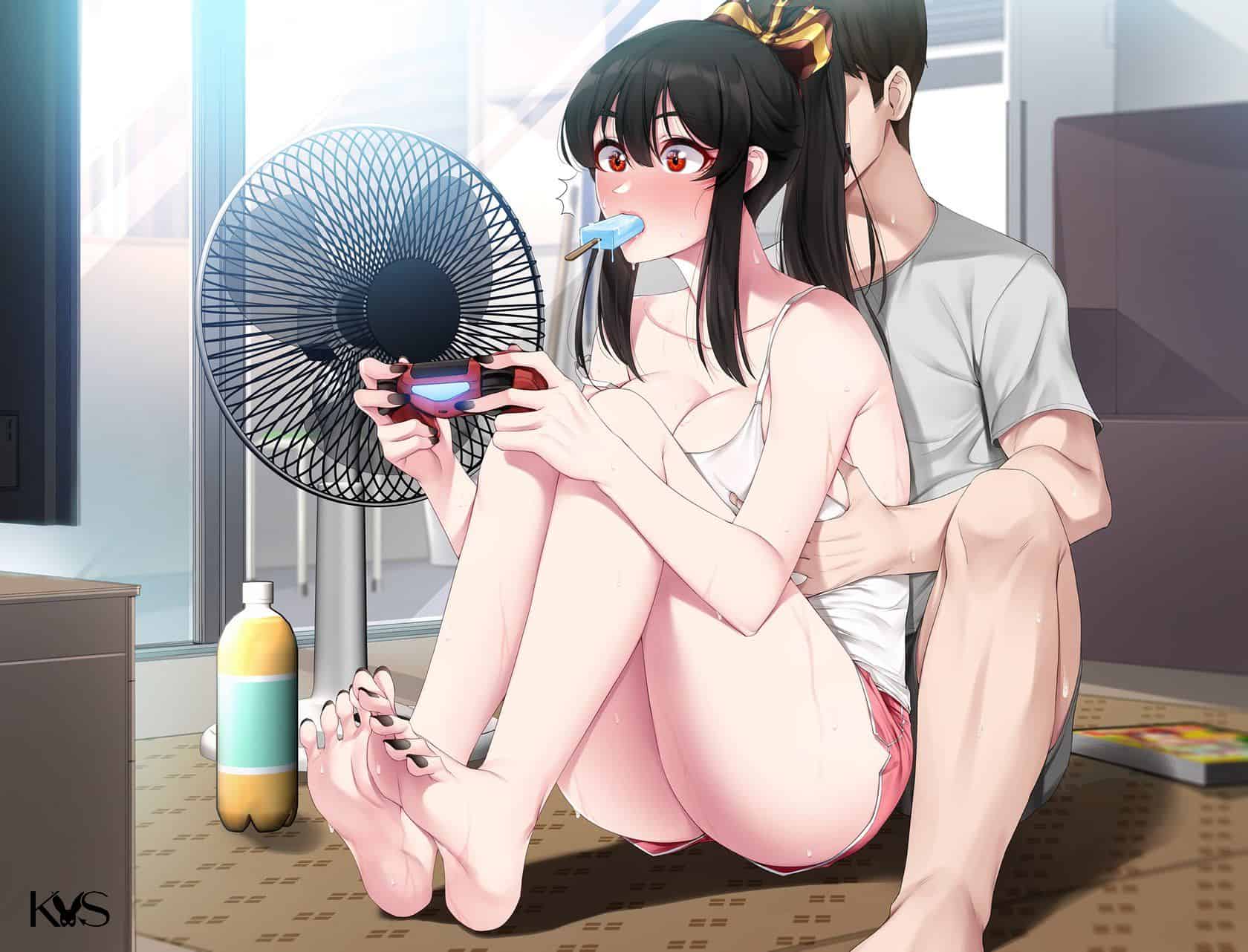
The appeal of ice play is not arbitrary. Cold stimulates a dense network of thermoreceptors in the skin that ordinarily alert the body to temperature change. During arousal, those signals travel the same neural pathways as touch, and the brain — already primed by desire — reads them as intensity rather than warning.
Several things are happening at once:
- Heightened attention. Cold commands focus. A blindfolded partner who cannot predict where the ice will land next is wholly present in their body in a way that routine touch rarely achieves.
- Blood flow and nerve sensitivity. A drop in surface temperature followed by the warmth of a hand or mouth creates a rush of circulation to the area. Nipples, the inner thighs, and the back of the neck are especially responsive because of their high nerve density.
- Power and surrender. One partner controls the cold; the other receives it. That asymmetry is a subtle form of dominance and submission even when no explicit D/s dynamic is named.
- Anticipation. Waiting for the next touch — ice or warm mouth, you never quite know — generates its own arousal, a phenomenon the Kinsey Institute's ongoing research into sexual response consistently identifies as a major driver of erotic pleasure. See kinseyinstitute.org for their published work on sensory arousal.
Ice play as temperature play: where it fits

Ice play is one half of temperature play. The other half is heat — wax, warming oils, heated toys, fire play. The two are often paired deliberately because the contrast between cold and warm amplifies both.
Cold-side tools include:
- Ice cubes and chips (the classic starting point)
- Cold water or ice water in a bowl
- Metal or glass toys placed in cold water or the freezer (steel and medical-grade borosilicate glass retain temperature well and are safe for internal use)
- Cooling massage oils or menthol-based lubes
- Cold food — ice cream, frozen fruit — for playful, lower-intensity exploration
Heat-side tools include wax play (hot candle wax dripped onto skin), warming massage oils, and heated towels. Combining both in a single scene — cold ice on one side of the body while warm lips work the other — is where temperature play earns its reputation for producing outsized sensation relative to how simple the tools are.
Signs ice play might be for you
- The idea of ice tracing down the back of your neck or across your chest is more interesting than ordinary massage.
- Temperature contrast in everyday life — jumping from a cold shower into a hot tub, or the shock of cold air on damp skin — catches your attention in a physical way.
- You are drawn to sensation kinks generally: impact play, feather teasing, or the use of texture.
- The idea of not quite knowing where the next sensation will land sounds more exciting than anxiety-inducing.
Not sure where ice play fits among your broader turn-ons? The Kink Quiz can help you map your sensory landscape.
How to explore ice play: practical technique

1. Start with the basics before anything internal
The ideal first experiment is straightforward: a bowl of ice cubes, a willing partner, and unhurried time. Run a wet ice cube across the collarbone, the inner wrist, the back of the knee. Notice what your partner responds to. You do not need restraints, a scene, or any special equipment.
Always wet the ice before it touches skin — a dry ice surface can stick briefly and cause micro-abrasion. Run it under cold water for a few seconds first so the surface is slick.
2. Learn the high-response zones
Some areas of the body are markedly more responsive to temperature than others. In rough order of sensitivity:
- Neck and earlobes — thin skin, high nerve density, close to the pulse
- Nipples — highly responsive; cold produces immediate physical reaction
- Inner thighs — sensitive and close to the groin; cold here builds anticipation effectively
- Lower abdomen — the contrast against warm skin is pronounced
- Behind the knees and inside the elbows — often overlooked; deliciously sensitive
Go slowly. Rapid movement spreads cold too fast and reduces sensation; slow, deliberate movement keeps the body guessing.
3. Combine cold and warm in the same moment
The most common advanced technique is using cold from the hand (ice cube) while applying warmth from the mouth simultaneously to a different area. An ice cube circling the outside while warm lips work inward creates a neurological feedback loop that many people find dramatically more intense than either sensation alone.
4. Temperature-contrast with toys
Metal and borosilicate glass toys are purpose-built for temperature play. Place them in a bowl of cold water for 10–15 minutes before use. Test the surface temperature against your inner wrist before any genital contact — it should feel cold but not painfully so. These toys are safe for internal use precisely because glass and steel do not harbour bacteria and can be sterilised between uses.
A note on ice internally: plain ice cubes should not be inserted vaginally or anally. As ice melts, the edges can become sharp; melting water can also disrupt vaginal pH. Stick to the vulva, the perineum, and external genital areas for direct ice contact. Use chilled toys for internal temperature play — they achieve the same sensation without the risks.
5. Pair with sensory deprivation
A blindfold transforms ice play. Without visual cues, the receiving partner cannot predict where the next sensation will arrive, and anticipation fills the gap between touches. Many people find this the single highest-impact upgrade to an ice play session.
Temperature contrast: wax and ice together

Combining ice with wax play in the same scene is a well-established practice in sensation kink. The structure is usually: hot wax dripped on one body part, ice run over another — or alternating between the two on the same area. The nervous system, receiving both signals in rapid succession, struggles to categorise either as simply "hot" or "cold" and the experience becomes something more like overwhelming intensity.
This is advanced play. Introduce wax and ice separately in different sessions before combining them. Establish clear signals — a word or gesture for "too cold" and a separate one for "too hot" — so your partner can communicate without breaking the scene.
Consent, safety, and aftercare in ice play

Ice play is one of the lower-risk sensation kinks, but consent and communication remain non-negotiable. Discuss the following before you begin:
Before the scene:
- Where is the ice welcome? Which areas are off-limits?
- Is the receiving partner comfortable with cold food or cold toys, or just plain ice?
- What is the safeword or signal to pause or stop entirely?
- Does the receiving partner have any cold sensitivity, Raynaud's phenomenon, or circulation issues? These are genuine contraindications — cold play can trigger vascular responses in susceptible people.
During:
- Check in regularly, especially with a new partner. Cold sensation can intensify faster than expected.
- Watch for shivering that is more than a pleasure response — sustained involuntary shivering is the body losing heat, not enjoying it. Stop and warm your partner.
- Watch for numbness. Brief localised numbness is normal; spreading or prolonged numbness is a cue to stop.
- Never leave a partner unattended who is restrained and in contact with cold.
Environmental cold play — a specific safety note: some accounts of ice play extend to outdoor cold exposure (snow, cold air). This is genuine edge play and carries real risks of hypothermia and frostbite. If you explore this, have warm blankets, a heated space, and a clear end-point planned before you begin. Monitor your partner continuously and stop at the first sign of confusion, pale or bluish skin, or inability to move fingers and toes.
Aftercare: after any temperature play session, warm your partner — physically and emotionally. A blanket, warm drink, and time for reconnection is standard. Some people feel emotionally open after intense sensory play in a way similar to aftercare following impact or bondage scenes. Check in on how they feel, not just immediately but the next day.
Is ice play normal?
Yes. Temperature play — including its cold variety — is widely practiced and appears consistently in surveys of kink interests as one of the more common sensory practices. It requires no special equipment beyond an ice tray, carries few risks when approached thoughtfully, and is accessible to people at any experience level with kink.
It is also genuinely versatile: a vanilla couple experimenting with a single ice cube during foreplay and an experienced BDSM practitioner incorporating cold into an elaborate scene are doing the same thing at different intensities. Neither version is more legitimate than the other.
For a grounded look at what healthy sexual exploration looks like more broadly, Scarleteen's resource library covers consent, communication, and navigating new territory at any age.
The ice cube is one of the oldest erotic tools in the world, and the reason is straightforward: it costs nothing and it works. Cold has a way of making the body pay attention in a way that warmth rarely does. Start simple, communicate well, and the rest follows.
— Samuel Davis
Ready to explore what else lights you up? Take the 2-minute Kink Quiz →