
Primal kink is what happens when you stop performing desire and start feeling it in your bones — a chase that ends in a tangle, a growl that means want, a wrestle that leads somewhere neither of you expected.
This guide covers what a primal kink actually is, why it resonates so deeply, the most common ways people play it out, and how to explore it safely and consensually.
What is a primal kink?
A primal kink is arousal from channeling raw animal instinct during sex — hunting, being hunted, wrestling, growling, biting, and surrendering to pure impulse rather than choreographed intimacy. It lives firmly inside BDSM but sits apart from tightly scripted sexual roleplay: where most scripted play has roles and rules negotiated in advance, a primal scene is about feeling rather than following a script.
The core of it is instinct over intellect. One partner may become the predator — stalking, pursuing, pinning — while the other becomes prey: evading, submitting, or fighting back. The charge comes from the loss of social inhibition and the raw, physical presence of another person whose desire is entirely unmistakeable.
The psychology: why primal play works
Primal kink resonates because it solves a problem most people carry into the bedroom — the performer's distance between what you want and what you let yourself do.
Three things drive it:
- Instinct as permission. Social conditioning teaches most people to moderate intensity — speak softly, move carefully, ask politely. A primal scene grants explicit permission to set that aside. The "animal" frame is less a literal claim and more a psychological key that unlocks the throttle.
- Physical presence and attunement. Primal play is almost entirely body-led. A chase, a wrestle, a pin — these require reading a partner's breath, weight, and resistance in real time. That quality of attention is deeply connecting in a way that no amount of talking replicates.
- Power exchange through the body. The predator-prey dynamic is one of the oldest expressions of dominance and submission. When it's consensual and trusted, the physical surrender of prey or the triumphant restraint of the hunter can feel enormously cathartic for both roles. Not sure whether you're built to hunt or be hunted? Our BDSM test can help map your dominant and submissive leanings.
Many people find that primal scenes also trigger a mild flow state — a narrowing of awareness to just the body, the breath, and the partner — similar to what submission or impact play can produce.
Primal kink vs. animal roleplay
These two things often get conflated, but they are not the same.
Animal roleplay (pet play) involves taking on a specific animal persona — a wolf, a cat, a dog — with the gear, postures, and behaviours that go with it. The identity and the props are the point. See the pet play kink guide for a full breakdown.
Primal kink does not require a persona. You are still yourself — just yourself stripped of politeness. There may be no collar, no leash, no explicit "character." The animal quality is a texture applied to the dynamic, not a costume to put on. Some people layer both: a wolf-play headspace with real primal physicality underneath. Others keep it entirely persona-free.
The distinction matters practically because primal kink tends to produce more spontaneous, unscripted moments, which is both its appeal and the reason consent architecture matters so much.
Common primal play scenarios
The hunt
One partner — the predator — stalks the other across a space while the prey attempts to evade or escape. The "game" ends when the predator catches and pins the prey. Done playfully, this can feel like hide-and-seek turned erotic; done with more intensity, it can shade into consensual non-consent territory (see CNC kink for that specific dynamic).
The wrestle
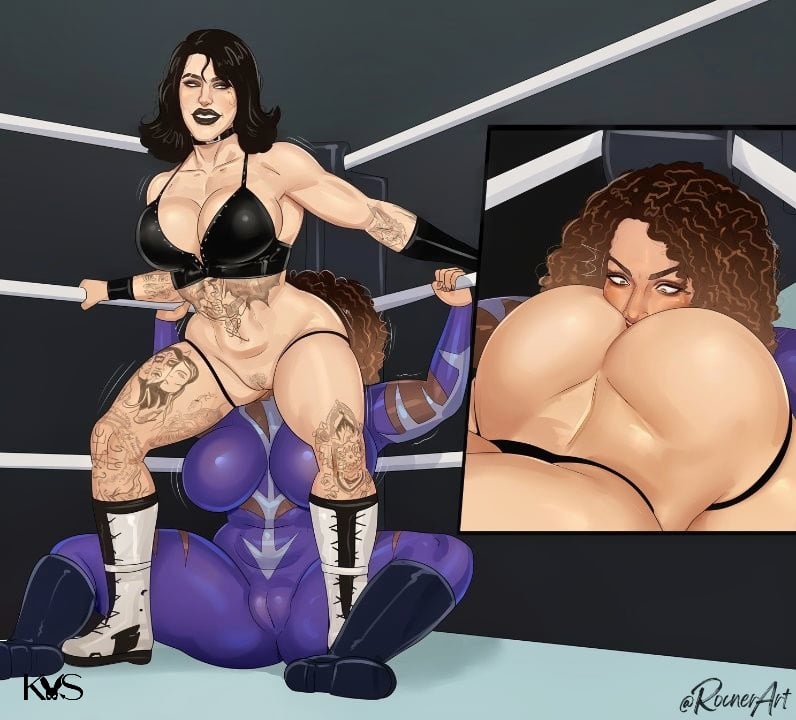
Physical grappling that establishes dominance — not combat, but a test of will and strength where one partner ends up on top, or underneath, or pinned in a way that makes the power dynamic visceral and undeniable. Wrestling tends to produce a lot of genuine laughter alongside genuine heat, which is part of its appeal.
Biting and growling
Primal kink often includes vocalisation (growling, snarling, possessive sounds) and physical marks — biting along the shoulder, neck, or thigh with enough pressure to leave a mark, if that's negotiated in advance. This is one area where pre-scene discussion matters most: biting hard enough to bruise requires explicit, enthusiastic consent.
Claiming
A subset of primal scenes focus on possession — a partner being "claimed" through physical intensity, pinning, or vocal assertion. This overlaps with dominance and submission dynamics but feels more visceral and less role-specific.
Signs you might have a primal kink
- Sex that feels too polite leaves you slightly frustrated, even when the technique is flawless.
- The idea of being chased (or doing the chasing) produces a specific and immediate charge.
- Biting, scratching, or grappling feels less like roughness and more like communication.
- You drop into a different mental state during physically intense sex — present, quiet, animal.
- You've caught yourself making sounds you'd never make in a polished encounter.
If several of those land, the Kink Quiz can help you map where primal sits among your other turn-ons.
How to explore a primal kink

- Talk outside the scene — in daylight, with clothes on. Primal scenes can escalate quickly and feel very different to an observer than to a participant. Before anything happens, both partners need to share what they find appealing, what feels threatening, and where the line is. This is not a passion-killer — it is what makes the passion possible.
- Negotiate physical limits specifically. What counts as acceptable pressure in a pin? Is biting on or off the table? Which body areas? What's the hard limit on noise, marks, or restraint? Specificity now prevents confusion mid-scene.
- Set a safe word and a non-verbal signal. Primal scenes often reduce speech — growling is not a consent withdrawal, but "red" or a double-tap on the arm is. Establish both before you start.
- Start smaller than you think you need to. A brief wrestle at the start of sex is a very workable entry point. You do not need a full predator-prey chase scene on your first attempt. Intensity can build across multiple sessions.
- Debrief and plan aftercare. Primal scenes can feel like an emotional pressure-valve release — exhilarating and slightly disorienting. Plan to come back to yourselves together: warmth, water, words. The guide to aftercare covers the full toolkit.
What to say (and not say) in a primal scene
Primal play is not typically wordy, but the right words before and after carry weight:
Before: "I want to chase you down and pin you — does that work?" / "If I growl, you can growl back — or you can run."
During (when words are used): possessive assertions, commands, wordless sounds. Checking in — "still good?" — is always fine, even in the middle of intensity.
After: "That was exactly what I needed." / "Let's talk about what worked." The debrief is not optional with primal play, especially early on.
Is a primal kink normal?
Yes. The desire to occasionally shed social convention in an intimate context and act on raw physical instinct is one of the more common erotic themes people report — affirmation of instinctive, unmediated desire consistently appears across large-scale survey data, including Dr. Justin Lehmiller's research on American sexual fantasies. Primal kink is healthy when it's fully consensual, clearly communicated, and genuinely wanted by everyone in the scene.

It is emphatically not a sign of aggression, poor impulse control, or anything that needs to be "fixed." The instincts primal kink draws on are part of human sexuality; the kink is simply the practice of channeling them deliberately, safely, and consensually with a trusted partner.
One note on intensity: because primal scenes can involve physical force — pinning, biting, chasing — they carry slightly more risk than purely verbal kinks. Clear negotiation, a working safe signal, and awareness of how your partner is responding throughout the scene are not formalities — they are what separates primal kink from something neither partner intended.
Primal kink doesn't ask you to become someone else. It asks you to stop pretending to be less than you are — and to find a partner who meets you there.
— Samuel Davis
Ready to go deeper?
Primal kink connects naturally to a cluster of adjacent dynamics: the power exchange of dominance and submission, the physical intensity of impact play, and the trust infrastructure of CNC scenes. Explore those guides to build out a picture of what you're drawn to. Those whose primal scenes push into the extreme end of danger fantasy may find the rare paraphilia of autassassinophilia — arousal from the risk-of-death scenario — worth understanding as a related edge dynamic.
Related: Primal play shows up across orientations, including in gay BDSM.
Take the 2-minute Kink Quiz to map your full erotic landscape →