
A shoe fetish is one of the most documented and historically widespread fetishes in human sexuality — and if stilettos, boots, or sneakers have ever done something for you that you couldn't quite explain, you're far from alone.
This guide covers what a shoe fetish is, the psychology behind it, the most common types, how to bring it into a relationship, and why it's a healthy part of the erotic landscape.
What is a shoe fetish?
A shoe fetish (also called retifism after the French author Nicolas-Edme Rétif, who wrote extensively about his arousal from shoes) is a sexual or erotic attraction to footwear. For someone with this fetish, a shoe — its shape, texture, scent, sound on a hard floor, or what it signals about the person wearing it — carries genuine erotic charge. It sits firmly in the Objects & Clothing category of kink: the arousal is anchored to an object rather than purely to a body part or act.
A shoe fetish overlaps with, but is distinct from, a foot fetish. Many people with a shoe fetish are drawn to footwear as much for what it is as for what it contains. Others move fluidly between both. Neither is a disorder — both are simply variations in erotic focus.
The psychology: why shoes?
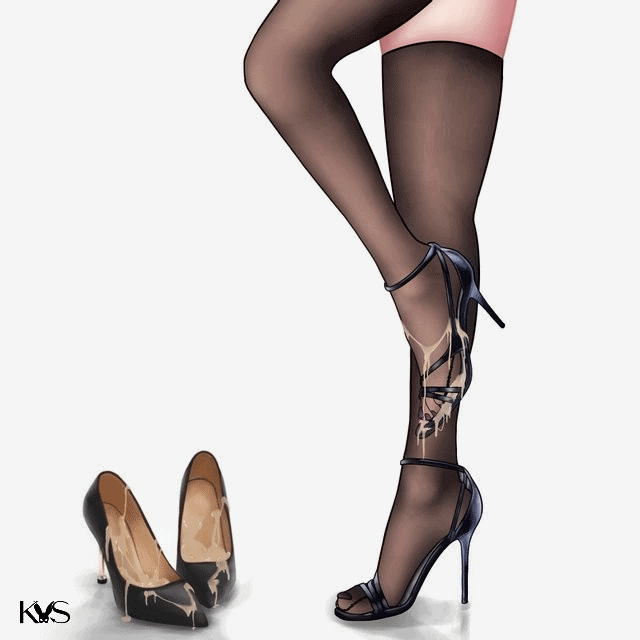
Fetishes for objects are among the best-studied in human sexuality, and shoes come up consistently. Several overlapping explanations help make sense of the appeal:
Sensory richness
Shoes offer a dense cluster of sensory signals: the gleam of patent leather, the click of a stiletto, the give of a well-worn sole, a faint trace of scent. For people who seek intense, layered sensory experiences — the kind explored in sensory play — footwear delivers on multiple channels at once. That multisensory quality makes arousal stickier and more memorable.
Classical conditioning
Behavioural psychology points to conditioning: if shoes appear repeatedly alongside arousing experiences — a glimpse of heels at exactly the right moment, a formative early association — the brain can come to wire footwear into its arousal circuitry. This is how many fetishes take root, and it's entirely automatic. The Kinsey Institute has documented the wide variety of objects and situations that become eroticised through exactly this kind of associative learning.
Power, status, and symbolism
Shoes carry enormous cultural weight. High heels signal confidence, height, and a particular flavour of femininity that many people find compelling. Boots evoke authority. A worn trainer suggests intimacy — the private, unglamorous version of a person. Arousal from shoes is often arousal from what they represent: power, submission, elegance, or raw proximity to someone's body.
Proximity to the body
Footwear is the clothing item most in contact with skin, warmth, and sweat. For people whose arousal is partly driven by closeness to another person's body — its heat, its lived-in quality — a shoe is a compelling proxy.
BDSM and power dynamics
Within dominance and submission, shoes have long played a structural role. Kneeling to remove or worship a dominant partner's shoes is a classic act of deference. A boot on the floor to be polished, stilettos worn as a condition of a scene — footwear becomes a prop in a power exchange that both partners find meaningful.
Types of shoe fetish
There is no single shoe fetish. The erotic focus varies considerably from person to person:
- High heels and stilettos — the most commonly reported variation. The added height, the sound, and the explicit femininity of a heel are each their own draw.
- Boots — thigh-high or ankle, leather or rubber. Often linked to authority, dominance, or military aesthetics.
- Sneakers and trainers — a strong subcommunity around athletic shoes, often focused on brand, condition (pristine vs. worn), and smell.
- Flats and ballet shoes — appealing for their softness and elegance rather than their power signalling.
- Worn or used shoes — the olfactory and intimate quality of a shoe that has been lived in. Often intersects with a smell-based erotic interest.
- Foot worship via shoes — shoes left on during sex, asked to be worn in specific ways, or used as part of a submission ritual.
Signs you might have a shoe fetish
- You notice footwear before almost anything else when you meet someone attractive.
- Specific shoe types appear reliably in your fantasies, even when the rest of the scenario changes.
- Asking a partner to keep their shoes on feels like a meaningful erotic request rather than a minor preference.
- Shoe-focused pornography does it for you in a way that bodypart-focused content alone doesn't.
If you're curious where a shoe fetish sits among your other turn-ons, the Kink Quiz can help map the wider picture.
How to explore a shoe fetish with a partner
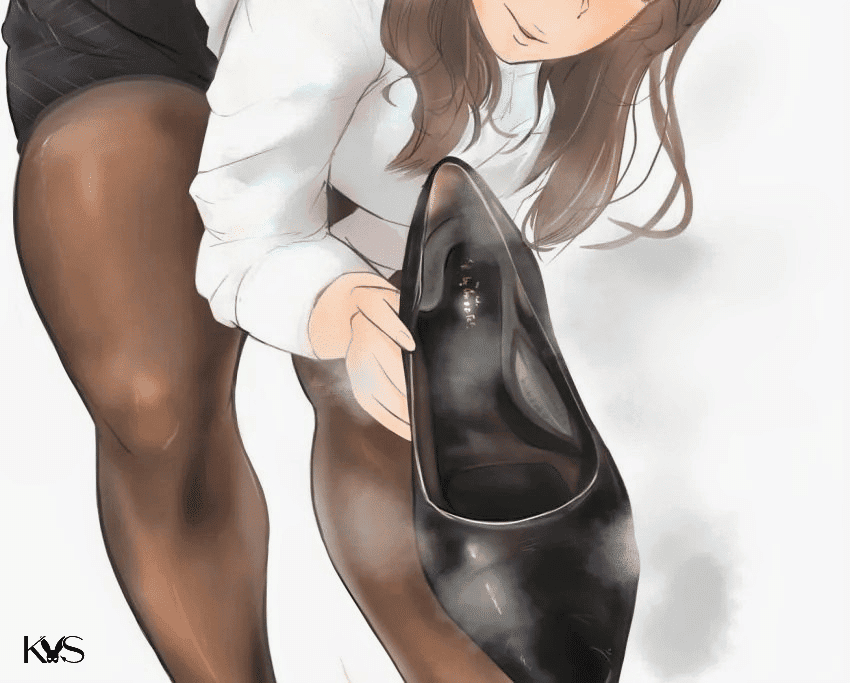
Bringing a fetish into a shared sex life is straightforward when it's led by honest conversation. Here is how to do it well:
-
Name it outside the bedroom. "I find high heels genuinely arousing — I'd love to incorporate that somehow" is a clear, low-pressure starting point. Naming a desire in ordinary life makes it far less charged than trying to introduce it mid-scene.
-
Start with observation, not action. Ask a partner to wear shoes you find appealing without any expectation of what happens next. Watching someone lace up boots or step into heels can be satisfying on its own and lets the interest land gradually rather than all at once.
-
Agree on what you'd like to try. Be specific: shoes on during sex, a request to walk across the room, kneeling to remove them as a ritual. Specificity makes it easier for a partner to enthusiastically consent or suggest an alternative.
-
Weave it into existing dynamics. If you already explore dominance and submission, footwear integrates naturally — boot worship, kneeling, carrying out a shoe-related instruction. If your dynamic is more equal, shoes on during intimacy can simply be a pleasing aesthetic choice.
-
Hygiene and care. Clean footwear matters if the activity involves close contact — licking, pressing to the face. Wipe down soles before play if needed; this is practical, not squeamish.
-
Use safewords and check in. Any kink play benefits from a safeword even when the activity seems mild. Check in during the scene, not just before it.
-
Aftercare. Some people feel unexpectedly vulnerable after kink scenes — even shoe-focused ones. A brief reconnection afterward (touch, conversation, water) is good practice. See our full guide to aftercare.
Consent applies at every step: agree on what's happening before it happens, keep communication open throughout, and respect a partner's limits without negotiation or pressure.
Shoe fetish and BDSM
Shoe worship sits naturally inside BDSM frameworks. Common configurations include:
- Submission rituals — a submissive kneels to remove, clean, or kiss a dominant's shoes as an act of deference at the start or end of a scene.
- Boot worship — a specific practice in which the dominant remains fully clothed and booted while the submissive attends to the footwear. The power differential is sharp and explicit.
- Instruction and control — a dominant dictates which shoes a submissive wears, how long, and when they are permitted to remove them. Footwear becomes part of a broader dominance dynamic.
If you're new to BDSM, establish clear agreements — what activities are in scope, what the safeword is, what aftercare will look like — before any scene involving power exchange.
Is a shoe fetish normal?
Yes — confidently, unambiguously. Footwear is one of the most commonly reported erotic focal points in human sexuality, and has been across cultures and centuries. Ancient Greek sex workers inscribed invitations into the soles of their sandals. Imperial Chinese culture eroticised the small-footed shoe. The fascination is not new, not rare, and not disordered.
A fetish for shoes only becomes a clinical concern if it causes significant distress to the person experiencing it or creates genuine harm to others — neither of which applies to consensual adult exploration. Justin Lehmiller's survey-based research at lehmiller.com consistently places object and clothing fetishes among the most widely shared fantasy categories — footwear near the top.
There is no shame in what turns you on. The only relevant questions are whether it's consensual, communicated, and something you genuinely enjoy.
A shoe fetish isn't a quirk to apologise for. It's a specific, vivid erotic language — and like any language, it becomes richer when you share it with someone who wants to understand it.
— Olivia Moore
Exploring further
A shoe fetish rarely exists in isolation. It often connects to adjacent interests worth understanding on their own terms: the broader world of sensory play, the power geometry of dominance and submission, or the intimacy and ritual of aftercare. Each of these guides goes deeper on its own territory.
Related: Shoe love blurs into the wider footwear fetish and into leg fetishism.
Ready to map everything you're curious about? Take the 2-minute Kink Quiz →